%3Aquality(80)&w=3840&q=75)
%3Aquality(80)&w=3840&q=75)
%3Aquality(80)&w=3840&q=75)
%3Aquality(80)&w=3840&q=75)
%3Aquality(80)&w=3840&q=75)
%3Aquality(75)&w=3840&q=75)
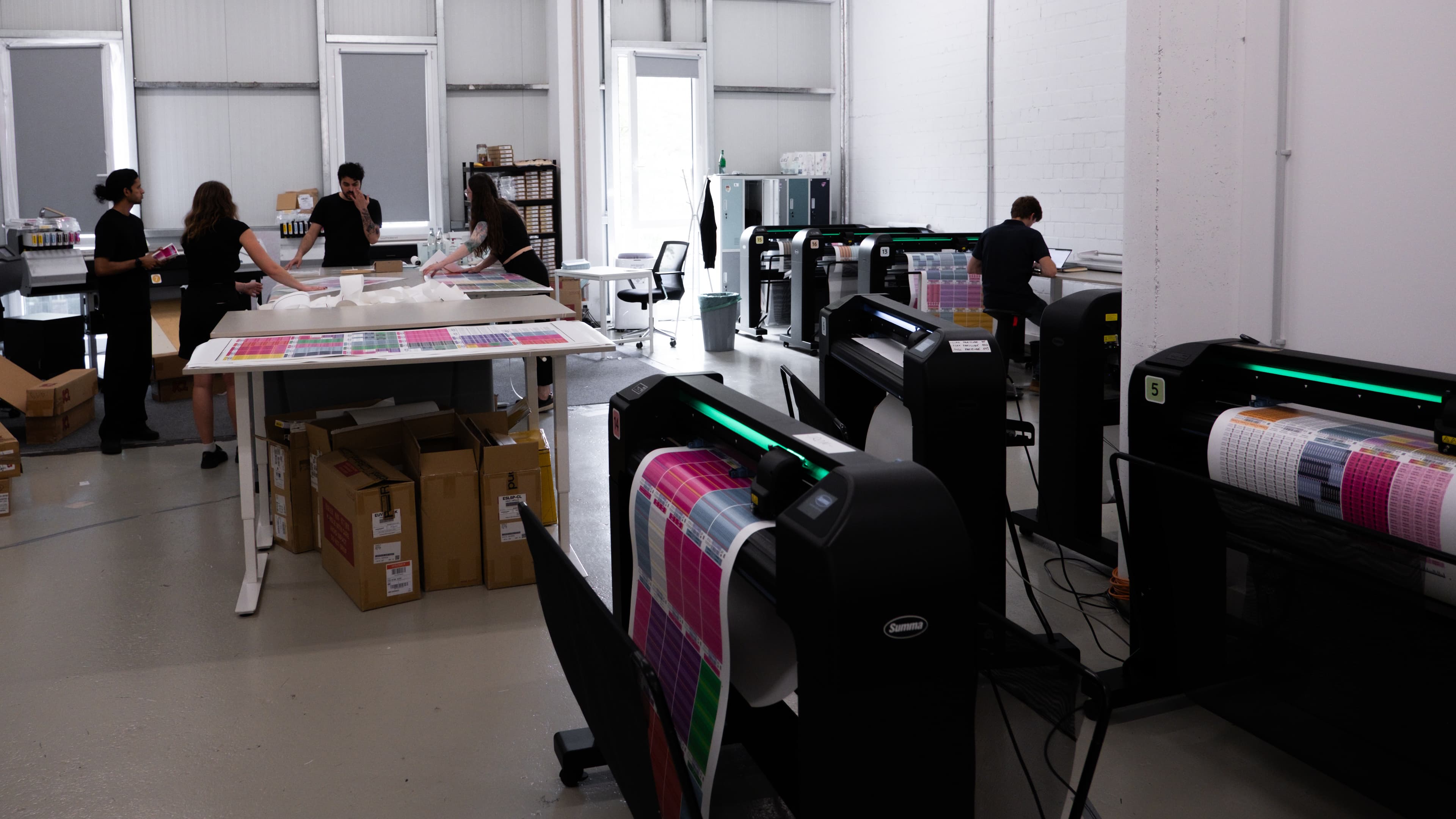
When your entire business model depends on shipping every order within 24 hours, the cutting stage cannot be the thing that slows you down. For Melu-Kids, the biggest European personalized sticker company on Amazon, growth meant freeing up their printers to print full-time, by integrating 16 Summa S3TC75 cutters into their line-up, giving the Berlin-based company the speed and precision to turn out a million orders a year, without missing a deadline.
Founded six years ago around a single printer, Melu-Kids has grown into Amazon's largest personalized sticker provider, with more than 14,000 customer reviews and a 95% positive rating. The company designs and produces personalized name stickers for pencils, books, lunch boxes, and dozens of other everyday items, shipping across Europe from its production floor in Berlin. For an Amazon-first business built on fast, made-to-order production, that growth only holds up if every stage of the process — including cutting — keeps pace with demand.
The challenge: one machine, two jobs
In its early years, Melu-Kids relied on printers that could both print and cut. It sounds efficient on paper, but in practice a single machine cannot do both at once. Every sheet went through a print job, followed by a cut job, lowering the total amount of sheets that could be handled in a working day. As order volume climbed, that trade-off turned into a bottleneck that meant not even long and tiring working days could provide the necessary output needed to meet the 24-hour shipping promise in the long term.
The fix was to split the two functions apart, so the print & cut machines could stay focused on what they do best — printing — while a dedicated cutting solution took over the second half of the job.
%3Aquality(75)&w=3840&q=75)
%3Aquality(75)&w=3840&q=75)
%3Aquality(75)&w=3840&q=75)


